
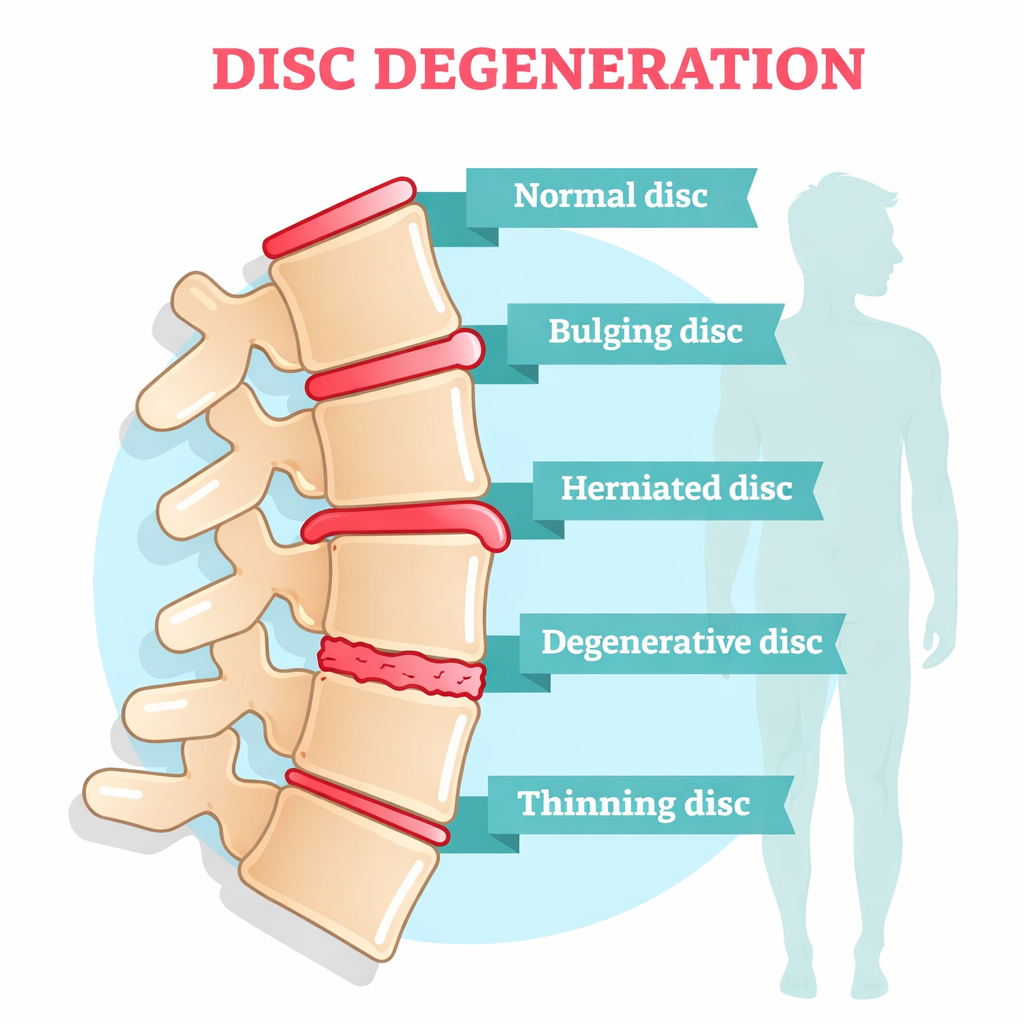
Disc Bulge and Herniation
What Is a Disc Bulge?
A disc bulge (also referred to as a bulging disc) is one of the most common causes of ongoing back, neck, and nerve-related pain. It occurs when the outer layer of the spinal disc — known as the annulus fibrosus — weakens and begins to extend beyond its normal boundary.
Intervertebral discs sit between each vertebra and act as shock absorbers, allowing the spine to move, bend, and load safely. Each disc has a tougher outer ring (annulus) and a softer inner centre (nucleus pulposus).
Over time, or following injury, repetitive strain, or poor loading patterns, small tears can develop within the annulus. As the structure weakens, the disc may begin to bulge outward, particularly under pressure.
Unlike a full disc herniation, where material from the centre pushes through the outer layer, a disc bulge typically involves a more generalised expansion of the disc — but it can still place significant pressure on nearby spinal nerves.
What Happens When a Disc Bulges?
When a disc bulges, two key processes often occur:
1. Mechanical Pressure on Nerves
The bulging disc can encroach on nearby nerve roots, particularly in the lumbar (lower back) or cervical (neck) spine. This may lead to symptoms such as:
• lower back or neck pain
• sciatica (pain travelling into the leg)
• arm pain or tingling
• numbness or weakness
2. Chemical Irritation
In addition to physical pressure, inflammation within the disc can irritate surrounding nerve tissue, contributing to ongoing pain and sensitivity.
This combination of mechanical compression and chemical irritation is often what drives persistent or fluctuating symptoms.
What Causes a Disc Bulge?
Disc bulges can develop gradually or following a specific event. Common contributing factors include:
• repetitive bending or lifting
• prolonged sitting or poor posture
• previous spinal injury
• reduced spinal stability or conditioning
• age-related degenerative changes
Many people are surprised to learn that disc bulges are not always caused by a single injury, but rather develop over time due to cumulative stress on the spine.
Can a Disc Bulge Heal?
In many cases, a disc bulge can improve over time with the right approach.
The goal of care is typically to:
• reduce pressure within the disc
• minimise irritation of surrounding nerves
• restore movement and function
• support the body’s natural healing processes
This often requires a structured, progressive approach, rather than a single treatment or short-term intervention.